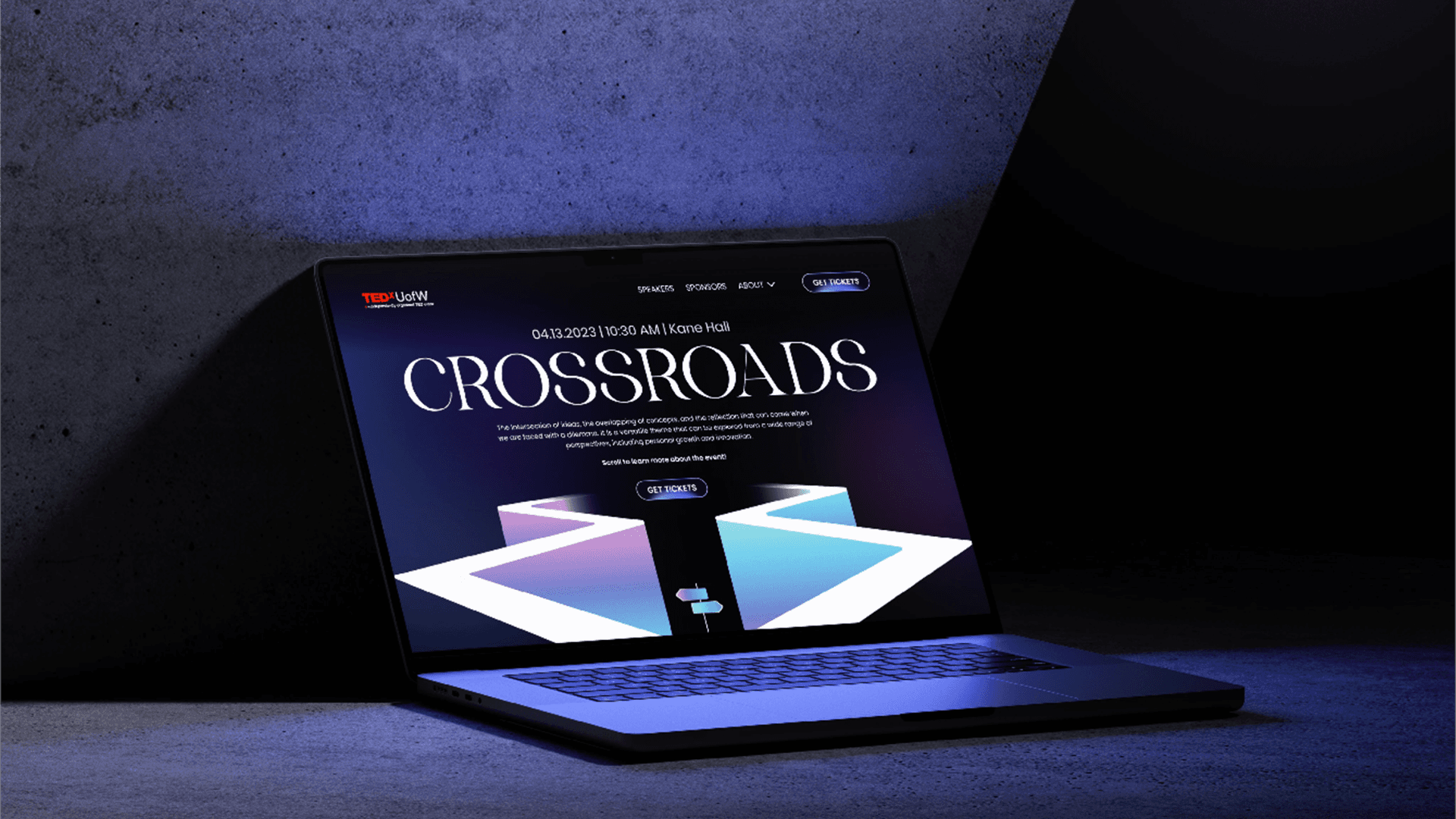
TEDxUofW / Conference Brand and Website
Increasing Visibility and Conference Attendance
I led and mentored a team of 5 multidisciplinary designers, establishing the visual direction and overseeing the full design process while coordinating with marketing and web development teams to deliver a unified website experience that increased visibility and attendance.
Role
Design Director
Team
Eddy Peng
Emily Hao
Michelle Nguyen
Ronan Pitzel
& Stephanie Chou
Duration
4 months
Skills
Brand Design,
Info Architecture,
A/B Testing,
Prototyping
The Challenge
How might we improve the conference website to increase visibility and drive attendance?
Since transitioning to a virtual format in 2020, TEDxUofW’s annual conference attendance fell to an all-time low. Even after returning in person in 2022, many students remained unaware of the organization’s presence on campus, contributing to low turnout. How might we improve the conference website to increase visibility and drive attendance?
Goals
What's Needed to Increase Visibility and Drive Attendance?
Prominence
Conference websites can easily become cluttered with tedious information. It’s important to present users with the information they want to see most.
Discoverability
If the information users want to find isn't available at first glance, it should be easy for them to find through intuitive navigation.
Solution
CROSSROADS : The Intersection of Ideas
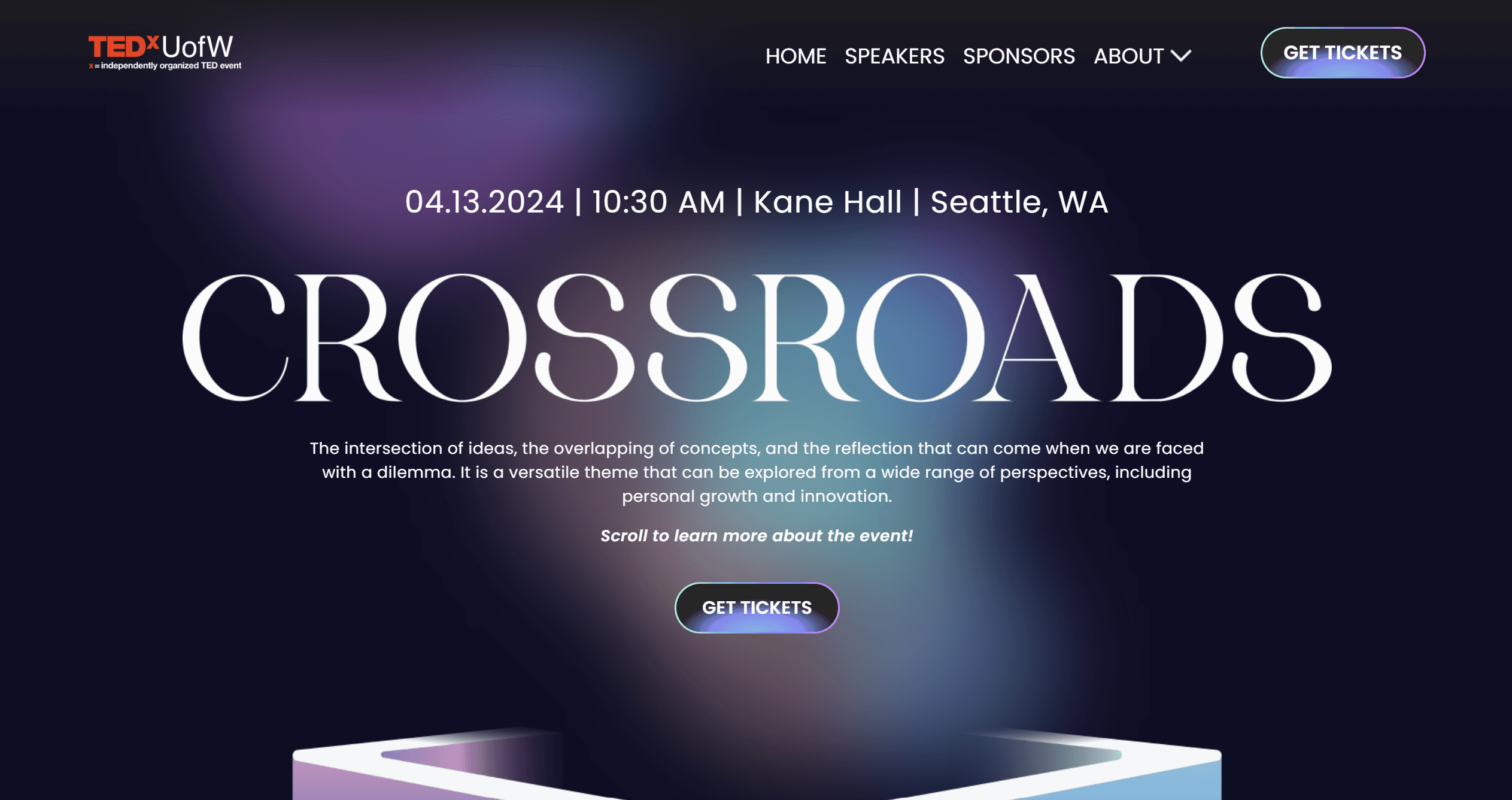
Prominent Event Information
Hero section clearly displays integral event information + buy button on each page
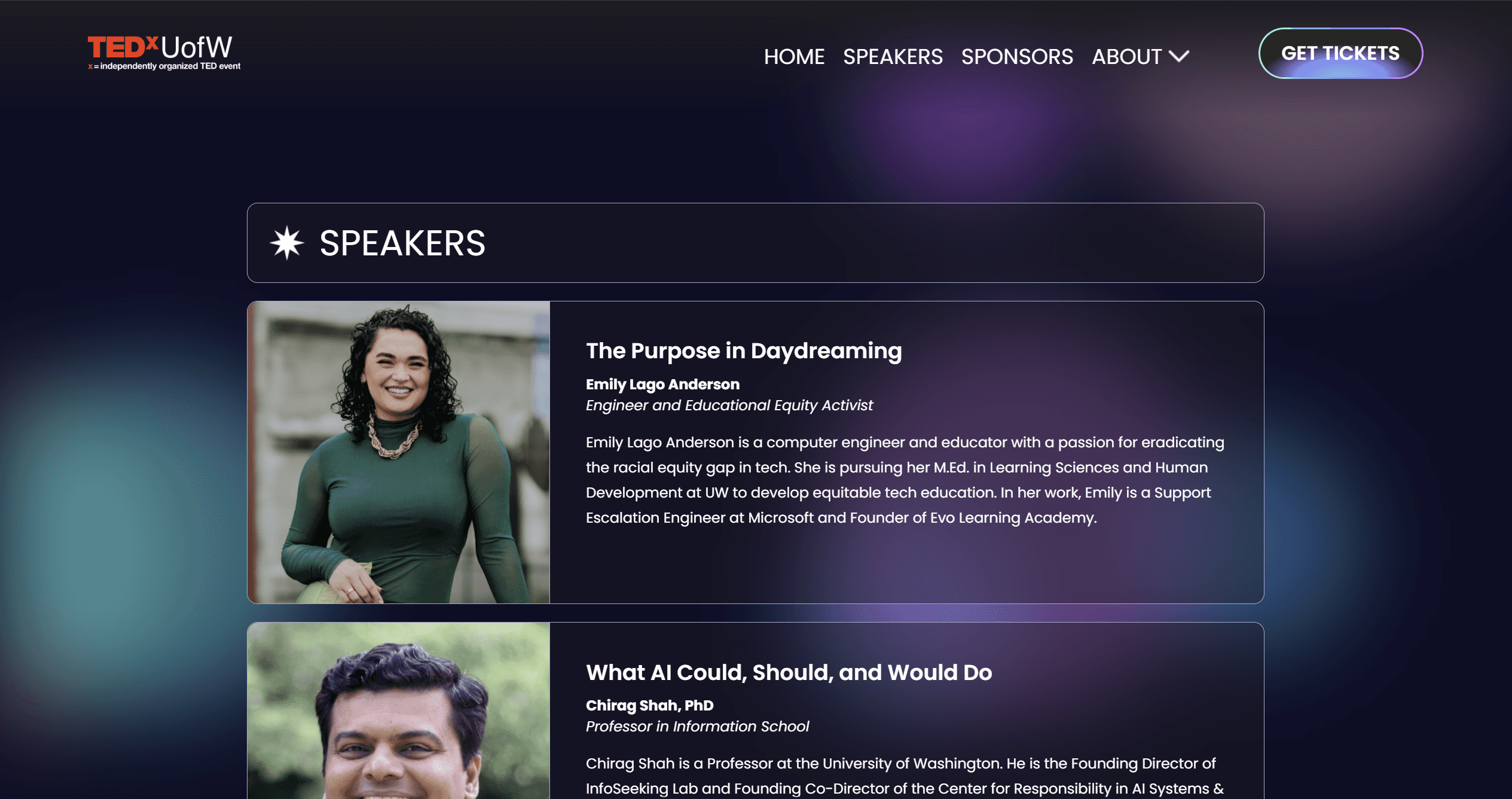
Spotlighting Vital Information
Highlighting the main reason people choose to attend our conference. Cards emphasize key information important to users deciding whether or not to buy a ticket.
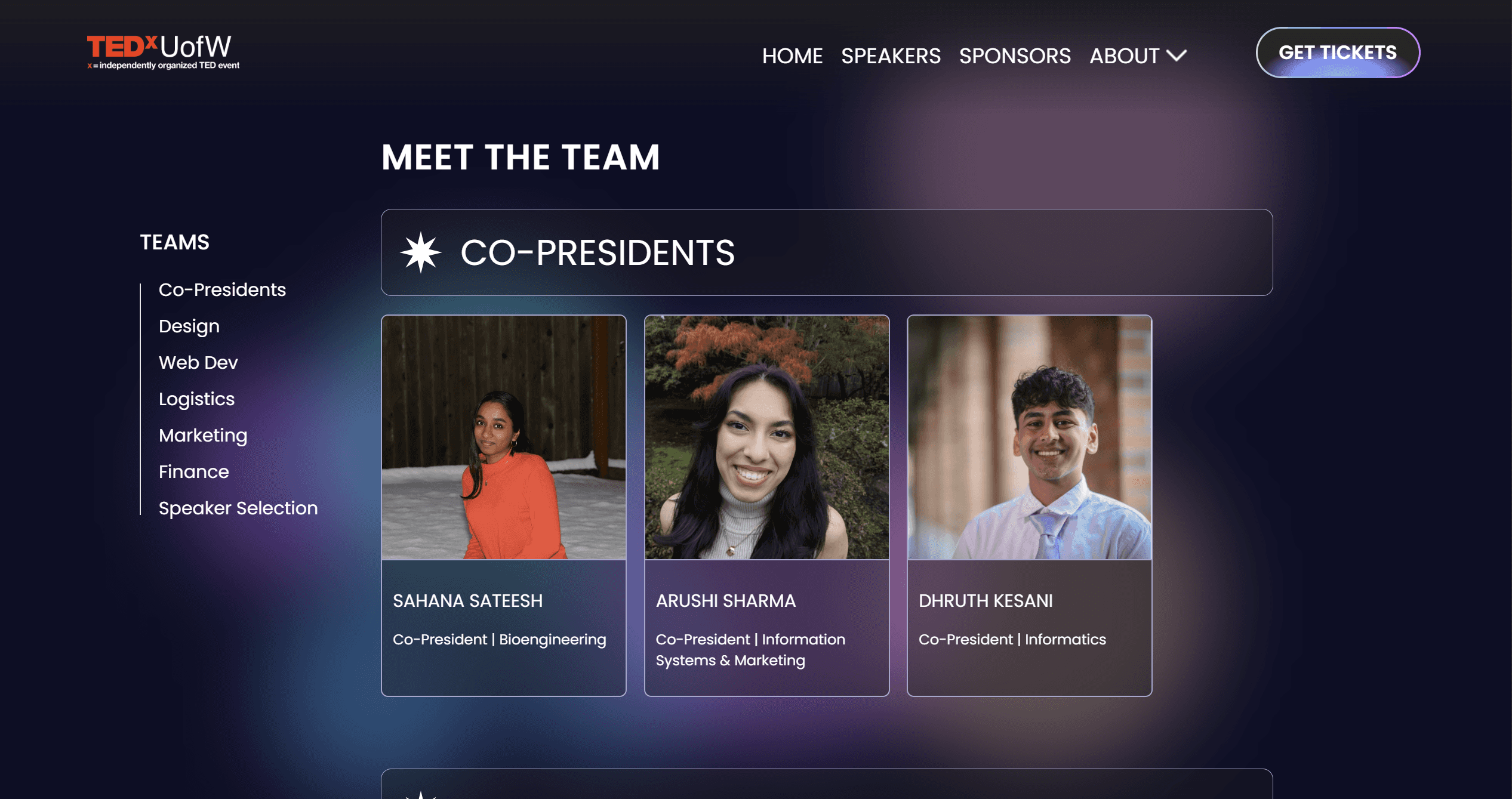
Efficient Navigation
Anchor links enhance navigation by letting users jump directly to key sections, making long pages easier and faster to browse.
Research
Understanding Attendance Motivations
To learn what key factors drove website visitors to buy a ticket, I conducted researched through attendee interviews, competitive anlaysis, and A/B Testing.
Key Information for Ticket Conversion
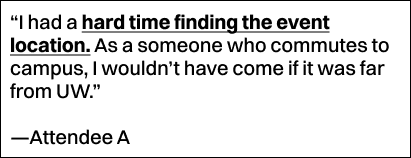
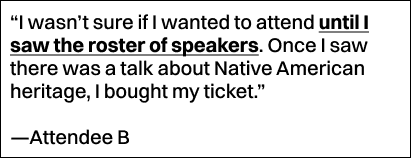
I interviewed attendees from our previous conference and learned what key information made them choose to purchase a ticket. This taught me that displaying this information prominently on our website helps make the decision process quick and easy.
Optimizing Information Architecture for Ticket Conversion
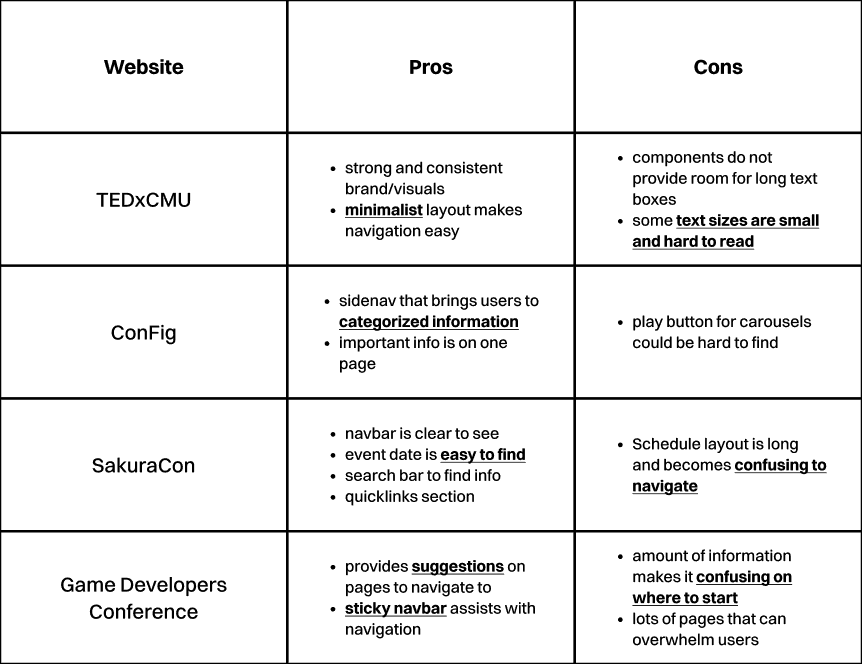
Through competitive analysis, I found that conference websites can easily become cluttered with long amounts of information. This taught me that having supportive navigation tools are imperative in creating intuitive interfaces.
Revamped Sitemap
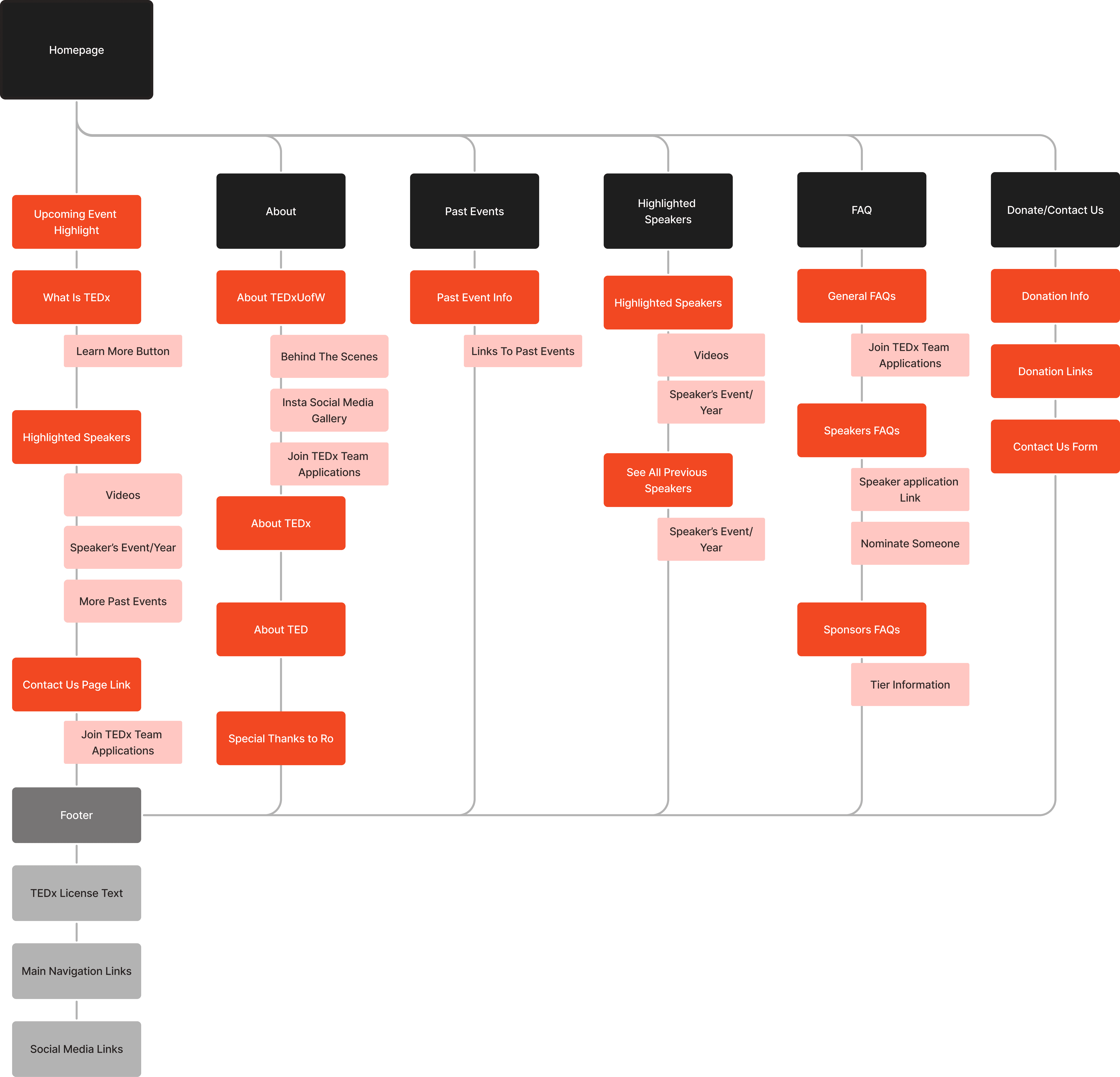
Our research insights helped us prioritize intuitive navigation and prominence of key information, leading us to revamp the sitemap to better highlight what matters most.
A/B Testing
Navigation That Drives Decisions
To ensure the designs were intuitive, my team and I conducted A/B Testing and discovered what features best supported user navigation.
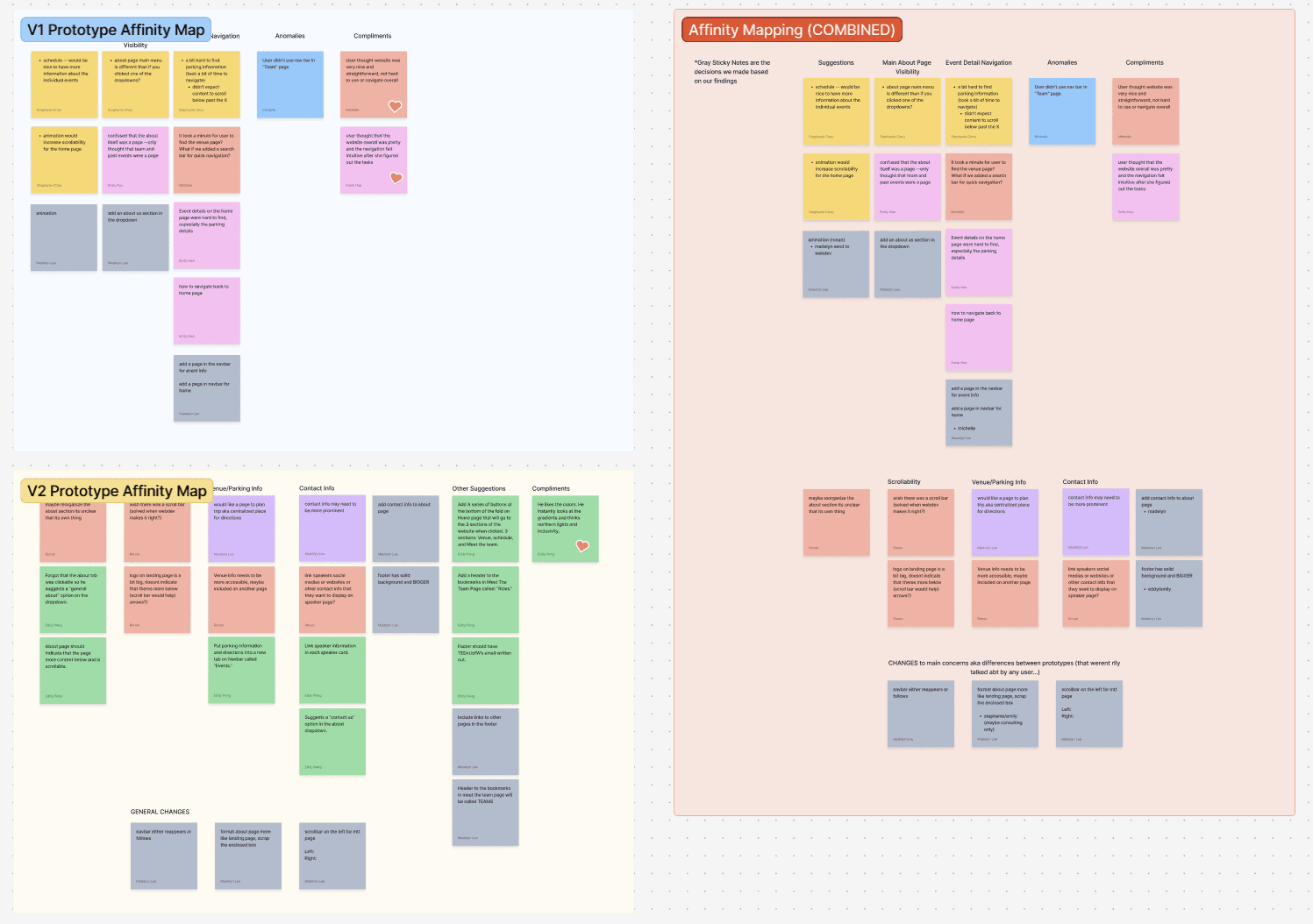
Insight 1
Shortening the Path to Purchase
Showing the navbar when users scroll upward helps them act faster. During our user interviews, after browsing a long page, many users scrolled back up to buy a ticket, so revealing the navbar at that moment lets them access it and buy a ticket quicker.
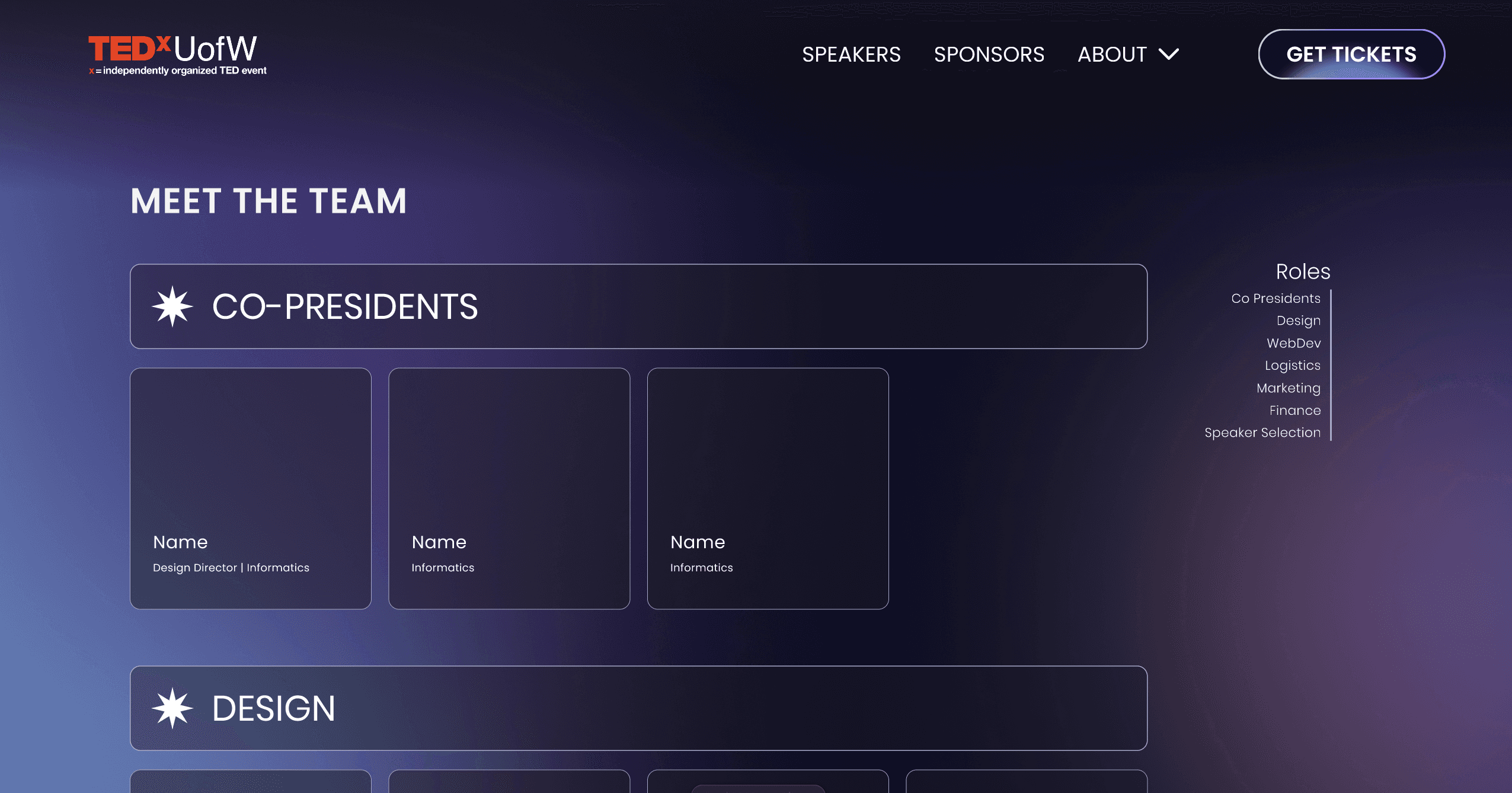
Insight 2
Faster Navigation with Clear Context
Legend fixed on the left communicates purpose quicker than when fixed on the right. When fixed on the right, users would scroll down half or more of the page before realizing its function, taking longer to find the desired information.
Before
After
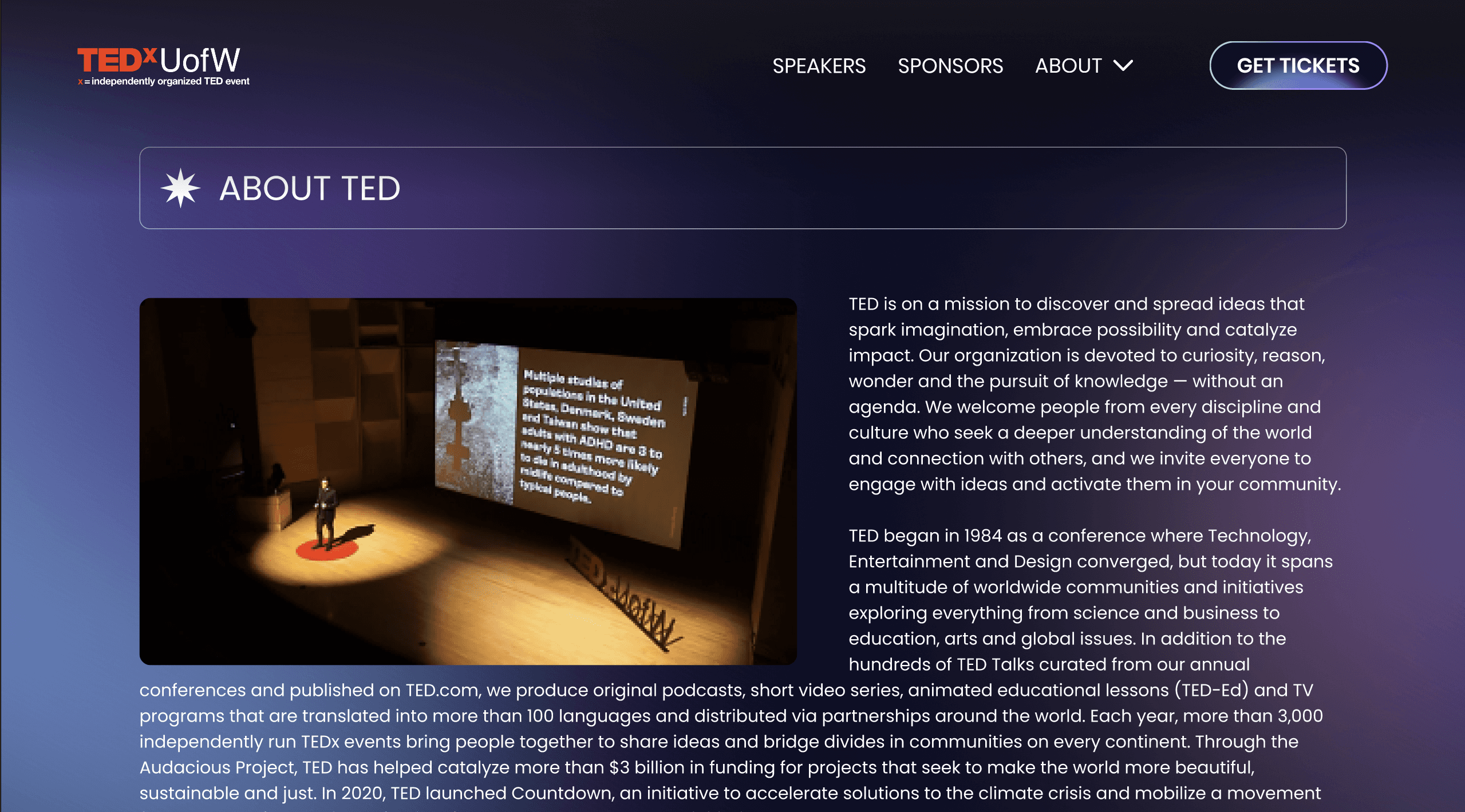
Insight 3
Scalable Cards for Longer Content
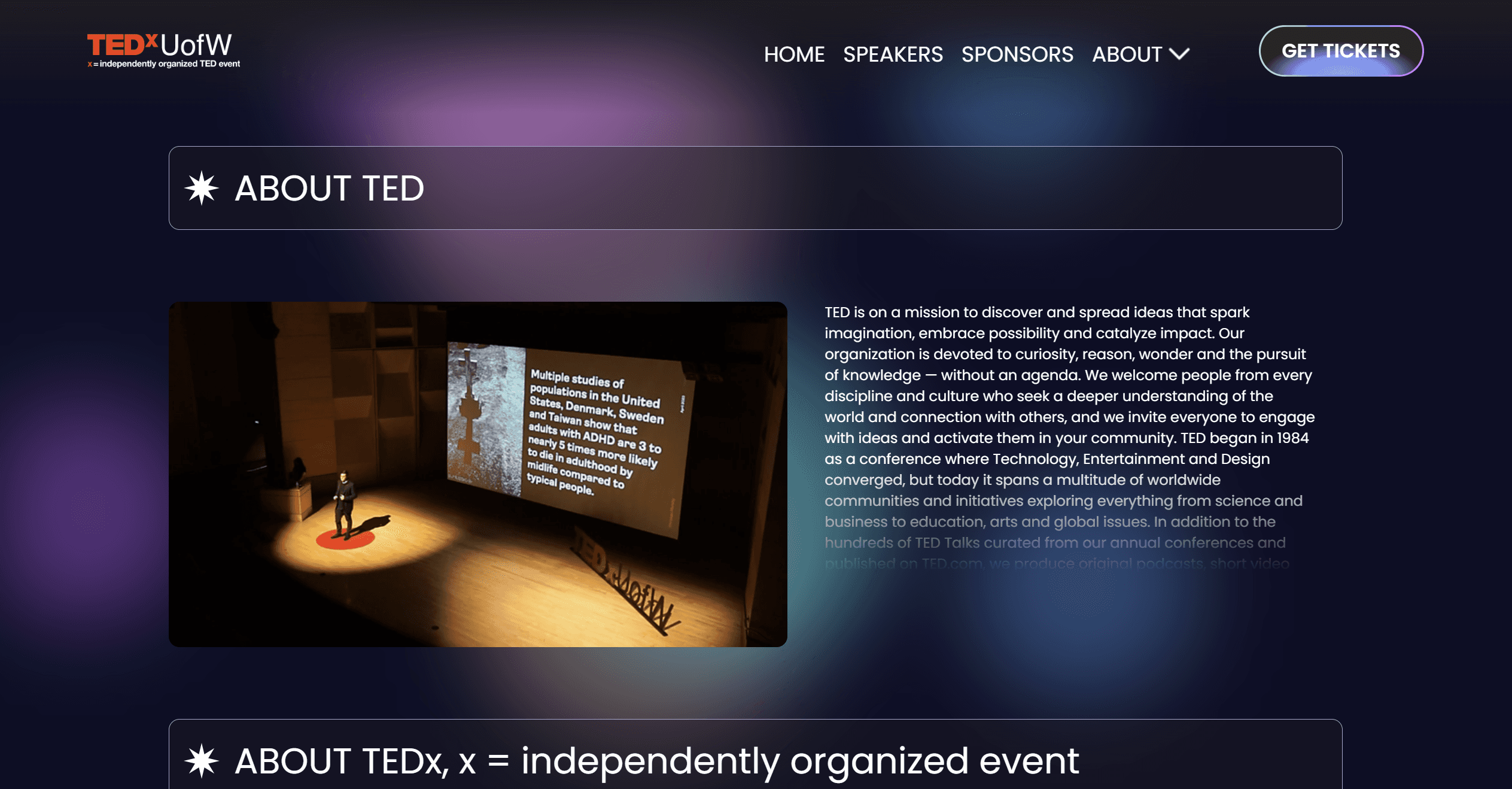
Cards need to be revisited for scalabilityg. Because our cards were made with fixed dimensions, in cases where longer text blocks are required, our design made text feel long and disengaging.
Before
After
Impact
Ticket Sales Increased 20%
Following the launch, ticket sales increased by 20%, indicating a clearer and more efficient path to purchase for users. Improvements such as quicker access to navigation, clearer interface cues, and streamlined information hierarchy enabled more visitors to convert from browsing to purchasing. Beyond improving the user experience, these intentional UX decisions supported smoother software development and created a foundation future TEDxUofW designers can build upon.
Reflection
What I Learned
Designing for Expansion
While building our components, I realized that enclosing them in boxes limited the content we could display. As my first responsive web app project, I learned to prioritize scalability and explored designs that didn’t rely on boxed layouts.
Balanced Design
As team lead, I learned to balance our designers’ ambitious ideas with what the web development team could implement in two months. Collaborating closely, I gained familiarity with HTML and CSS and learned to design within developers’ skillsets to create compelling, feasible solutions.
The Journey is UX
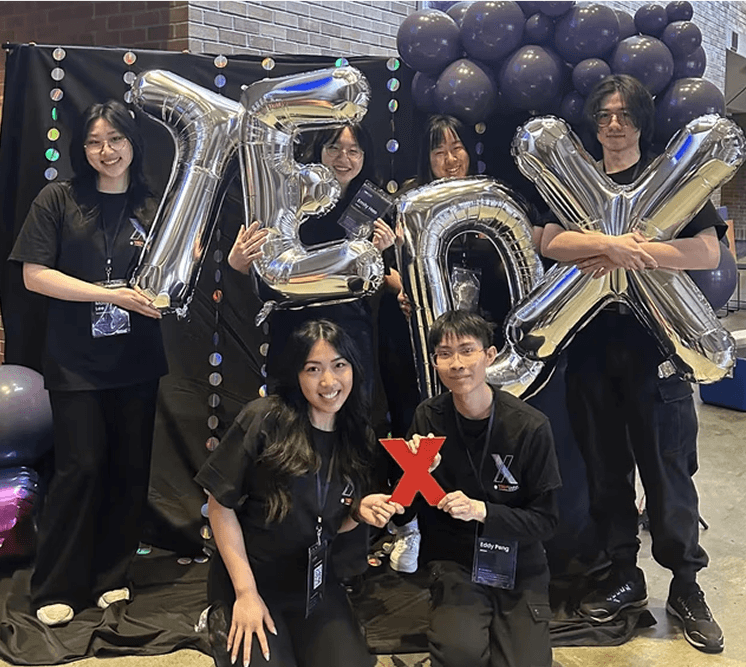
Leading the design team was a rewarding experience, as I enjoyed collaborating with my team members, learning from their unique skills, and fostering a positive and engaging workflow. I especially loved shaping our brand identity and look forward to further exploring brand strategy and how brand identity translates into digital products.